 New games added weekly —

SUDOKU
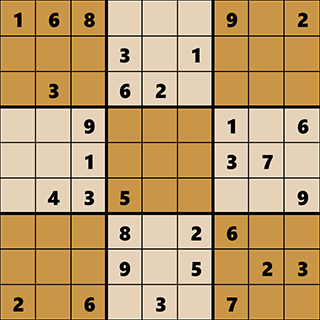
A nine-by-nine grid, a handful of numbers already filled in, and one rule: every row, every column and every three-by-three box has to contain the digits one to nine exactly once. That's all Sudoku has ever been, and it's still one of the best ways to spend ten quiet minutes.
You can choose an easier or a harder puzzle depending on how much time and patience you have. Easy grids give you enough starting numbers that you can usually find the next move by scanning a single row or box. Harder ones leave gaps where no square has an obvious answer, and that's where the pencil notes come in.
Notes let you jot small candidate numbers in a square without committing to them. It feels slow at first, but on a tough grid it's the only reliable way forward: once a row has two squares that can only be a 3 or a 7, for example, you know those numbers belong there and can rule them out everywhere else in that row.
No arithmetic is involved — the digits could just as well be symbols. It's purely logic. You can play with a mouse, a keyboard or by touch, and since there's no timer pushing you, it's easy to set a puzzle down and come back to it.